back
Toronto, ON
EST
From consecutive missed targets to 101% coverage: designing AI-powered data stewardship for Dell's customer records platform
From consecutive missed targets to 101% coverage: designing AI-powered data stewardship for Dell's customer records platform
From consecutive missed targets to 101% coverage: designing AI-powered data stewardship for Dell's customer records platform
Dell Technologies is a global technology company operating in 180+ countries with $90B+ in annual revenue, ranking among the world's largest PC and enterprise infrastructure providers.
Dell Technologies is a global technology company operating in 180+ countries with $90B+ in annual revenue, ranking among the world's largest PC and enterprise infrastructure providers.
TOOLS:
Figma

github copilot
usertesting.com
1->N
Enterprise
year
2025
role
Senior Designer / Lead
timeline
3 months → Design & Implementation
timeline
3 months - Feature release
TEAM
2 Product Designers
Product Manager
Tech Lead + Eng Team
Content & Research Team
role
Lead Designer
Confidential information and sensitive intellectual property has been omitted or obfuscated. All content reflects my own work and processes and not necessarily the views of Dell Technologies.
SHIPPED solution
The Challenge — Consecutive Misses, Real Consequences
The Challenge — Consecutive Misses, Real Consequences
The Challenge — Consecutive Misses, Real Consequences
As the lead designer on a 3-month project, I tackled a recurring business problem: the data governance team was missing quarterly targets for data cleansing and ticket resolution, directly hurting SLA performance indicators and downstream sales revenue. Business initially pointed to auto-assignment as the fix.
As the lead designer on a 3-month project, I tackled a recurring business problem: the data governance team was missing quarterly targets for data cleansing and ticket resolution, directly hurting SLA performance indicators and downstream sales revenue. Business initially pointed to auto-assignment as the fix.
The project would be a success if it improved business and efficiency metrics tied to data cleansed, tickets resolved, or dataset coverage goals.
The project would be a success if it improved business and efficiency metrics tied to data cleansed, tickets resolved, or dataset coverage goals.
The Solution — A Steward That Never Clocks Out
The Solution — A Steward That Never Clocks Out
The Solution — A Steward That Never Clocks Out
I designed a system that leverages an autonomous data stewardship layer with explainability, audit-ability, and controlled delegation between human and machine agents.
The feature uses a rule-based AI data matching layer that autonomously resolves low-complexity customer records and enriches higher-complexity tasks with contextual data for manual review, allowing the Data Strategy and BI teams to meet and exceed quarterly KPIs. rule-based AI data matching. The system works across four core capabilities:
I designed a system that leverages an autonomous data stewardship layer with explainability, audit-ability, and controlled delegation between human and machine agents.
The feature uses a rule-based AI data matching layer that autonomously resolves low-complexity customer records and enriches higher-complexity tasks with contextual data for manual review, allowing the Data Strategy and BI teams to meet and exceed quarterly KPIs. rule-based AI data matching. The system works across four core capabilities:
Auto-Assignment Configuration
Lead Stewards configure condition-based rules to assign both human and AI stewards to datasets by strategic relevance, managing load and availability in-platform.
Lead Stewards configure condition-based rules to assign both human and AI stewards to datasets by strategic relevance, managing load and availability in-platform.
AI Steward Auto-Resolution
When assigned to a dataset, the AI Steward autonomously resolves low-priority tasks at 95-100% Confidence Score Index. Every AI Steward decision metadata is logged and can be tracked with a unique identifier for auditing and efficiency tracking.
When assigned to a dataset, the AI Steward autonomously resolves low-priority tasks at 95-100% Confidence Score Index. Every AI Steward decision metadata is logged and can be tracked with a unique identifier for auditing and efficiency tracking.
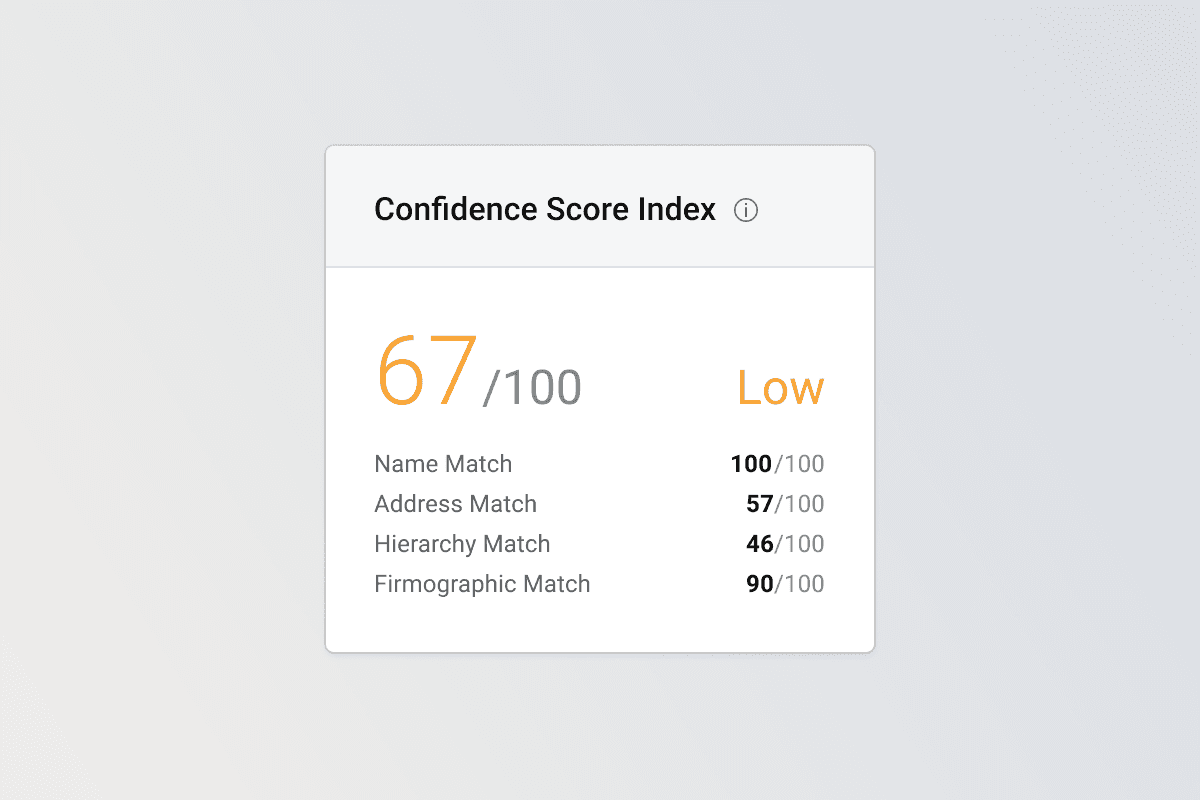
Confidence Score Index
Predefined match thresholds act as guardrails. The algorithm measures similarity across naming, addresses, customer hierarchy, and firmographic data to determine whether to act or escalate.
Predefined match thresholds act as guardrails. The algorithm measures similarity across naming, addresses, customer hierarchy, and firmographic data to determine whether to act or escalate.
Task Enrichment
When the confidence threshold isn't met, the system flags the record, creates a task with a resolution suggestion, then assigns it to a human steward, allowing them to use the data to get a head start on the analysis process. Stewards can also give feedback on enrichment quality, generating training data over time.
When the confidence threshold isn't met, the system flags the record, creates a task with a resolution suggestion, then assigns it to a human steward, allowing them to use the data to get a head start on the analysis process. Stewards can also give feedback on enrichment quality, generating training data over time.
Impact — From Backlog to Benchmark
Impact — From Backlog to Benchmark
Impact — From Backlog to Benchmark
*During measured period from 2024 Q2 to 2025 Q1
*During measured period from 2024 Q2 to 2025 Q1
Dataset coverage vs. quarterly target increased from 64% pre-launch to 96% in Q3, reaching 101% in Q4, surpassing target for the first time after consecutive misses
Automated task precision held strong at 89% (Q3) and 84% (Q4), requiring no human override in the vast majority of cases
Automated task precision held strong at 89% (Q3) and 84% (Q4), requiring no human override in the vast majority of cases
Re-established predictability in quarterly data quality KPIs
Re-established predictability in quarterly data quality KPIs
Validated the production readiness of the match algorithm ahead of roadmap timelines
Validated the production readiness of the match algorithm ahead of roadmap timelines
Case STUDY Rationale below
Case STUDY Rationale below
Defining the PRoblem
How Data Management Works at Dell
How Data Management Works at Dell
How Data Management Works at Dell
As part of the Sales Intelligence design team. I've led the 0→1 design program for Castle, an internal platform used by the Customer Data Governance team Data Stewards to enforce data quality across company databases. The core mission: merge Dell's massive legacy customer databases, spanning acquisitions like EMC, into a single source of truth called Castle DB, providing golden records across internal sales platforms.
As part of the Sales Intelligence design team. I've led the 0→1 design program for Castle, an internal platform used by the Customer Data Governance team Data Stewards to enforce data quality across company databases. The core mission: merge Dell's massive legacy customer databases, spanning acquisitions like EMC, into a single source of truth called Castle DB, providing golden records across internal sales platforms.
Data Stewards are the operators of this system. They resolve prioritized ticketed tasks within SLA by researching customer primary and firmographic data and completing records with the most current information.
Data Stewards are the operators of this system. They resolve prioritized ticketed tasks within SLA by researching customer primary and firmographic data and completing records with the most current information.
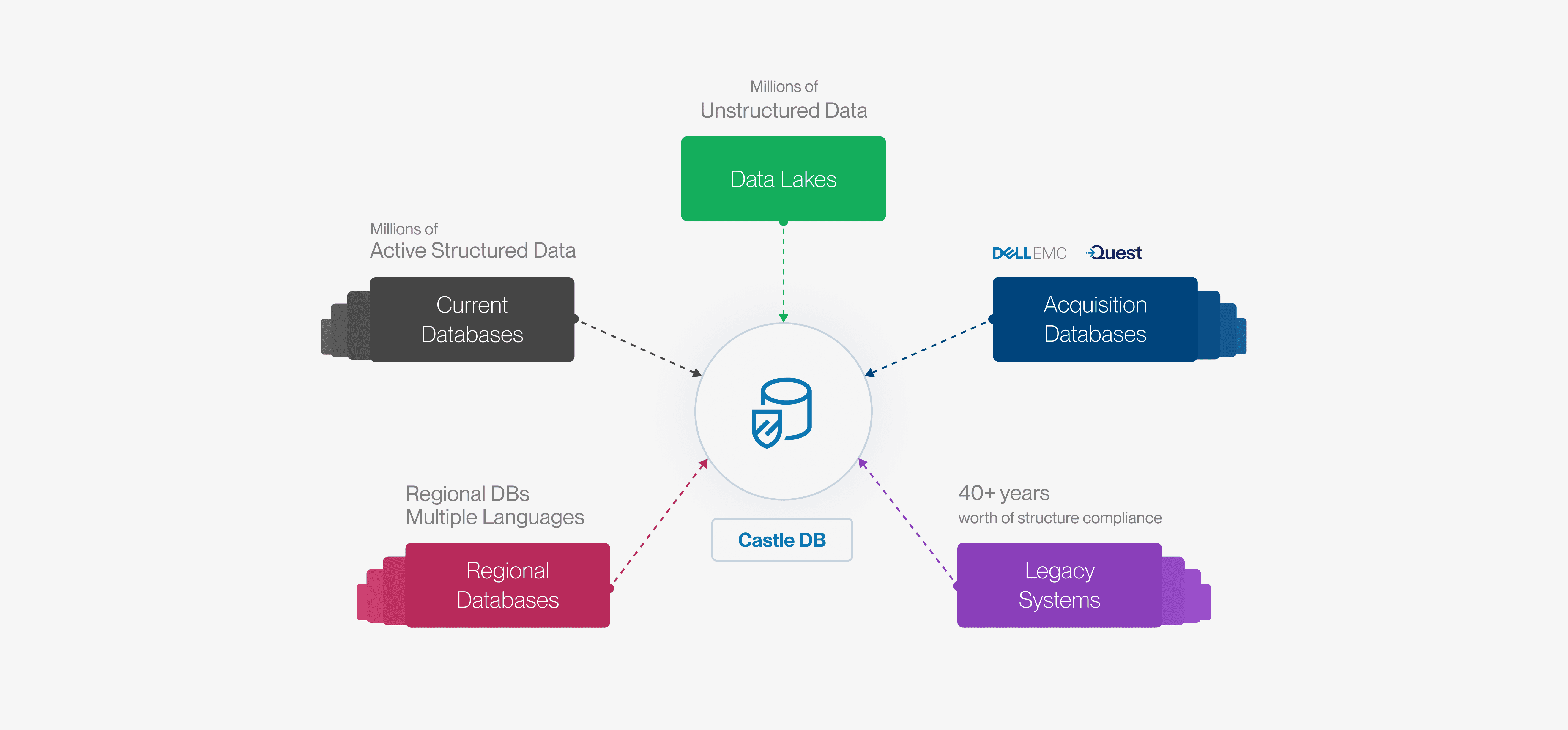
IMAGE 5
High Level Database Landscape
What Triggered This Project
Business flagged being behind target goals for dataset cleansing and ticket resolution quarter after quarter, hurting business SLA indicators and potential sales revenue downstream. The accumulation was linked to the high volume of tickets and inefficiencies while resolving prioritized datasets. Business initially pointed to implementing an auto-assignment feature as a fix.
Business flagged being behind target goals for dataset cleansing and ticket resolution quarter after quarter, hurting business SLA indicators and potential sales revenue downstream. The accumulation was linked to the high volume of tickets and inefficiencies while resolving prioritized datasets. Business initially pointed to implementing an auto-assignment feature as a fix.
Strategic Approach: Tapping the right PoCs
Rather than jumping straight to auto-assignment as suggested, I treated the symptom as a signal of a deeper problem and pulled in SMEs and key technical stakeholders to investigate. Two things surfaced:
Rather than jumping straight to auto-assignment as suggested, I treated the symptom as a signal of a deeper problem and pulled in SMEs and key technical stakeholders to investigate. Two things surfaced:
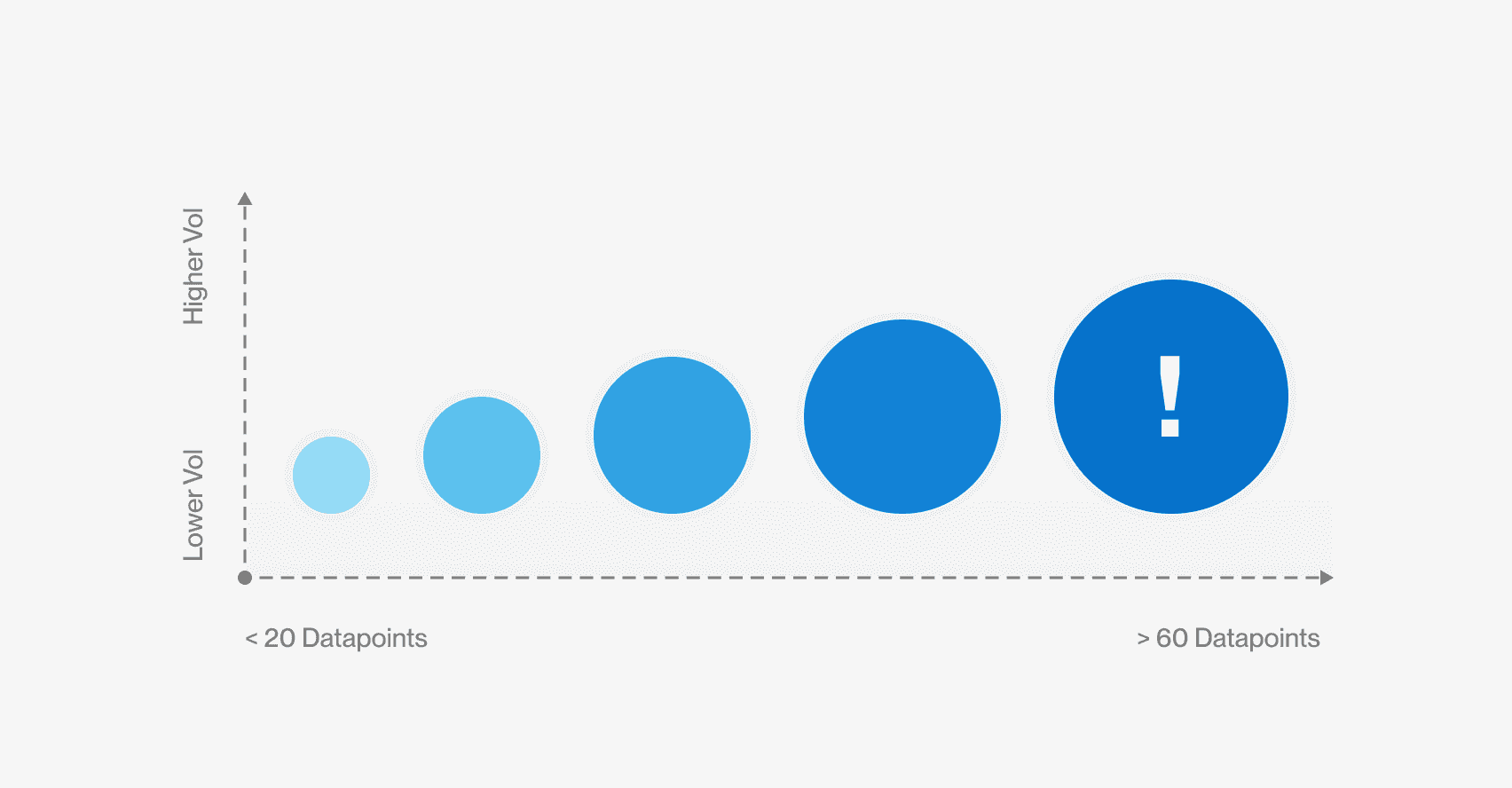
IMAGE 6
File Complexity and Data Volume
SMEs explained that millions of customer records across legacy and acquired systems (e.g., EMC) were stitched together using multiple parallel identifiers, sometimes up to seven for the same data point. Over time, introducing structural inconsistencies that accumulated into a large, unresolved backlog without scalable processes to resolve them.
SMEs explained that millions of customer records across legacy and acquired systems (e.g., EMC) were stitched together using multiple parallel identifiers, sometimes up to seven for the same data point. Over time, introducing structural inconsistencies that accumulated into a large, unresolved backlog without scalable processes to resolve them.
IT shared a walkthrough demo for a match-oriented algorithm already in development, mature enough for beta in production. It could handle low-priority task resolution ahead of the original vision roadmap timeline (implement AI Agent-based experience by Mid FY28).
IT shared a walkthrough demo for a match-oriented algorithm already in development, mature enough for beta in production. It could handle low-priority task resolution ahead of the original vision roadmap timeline (implement AI Agent-based experience by Mid FY28).
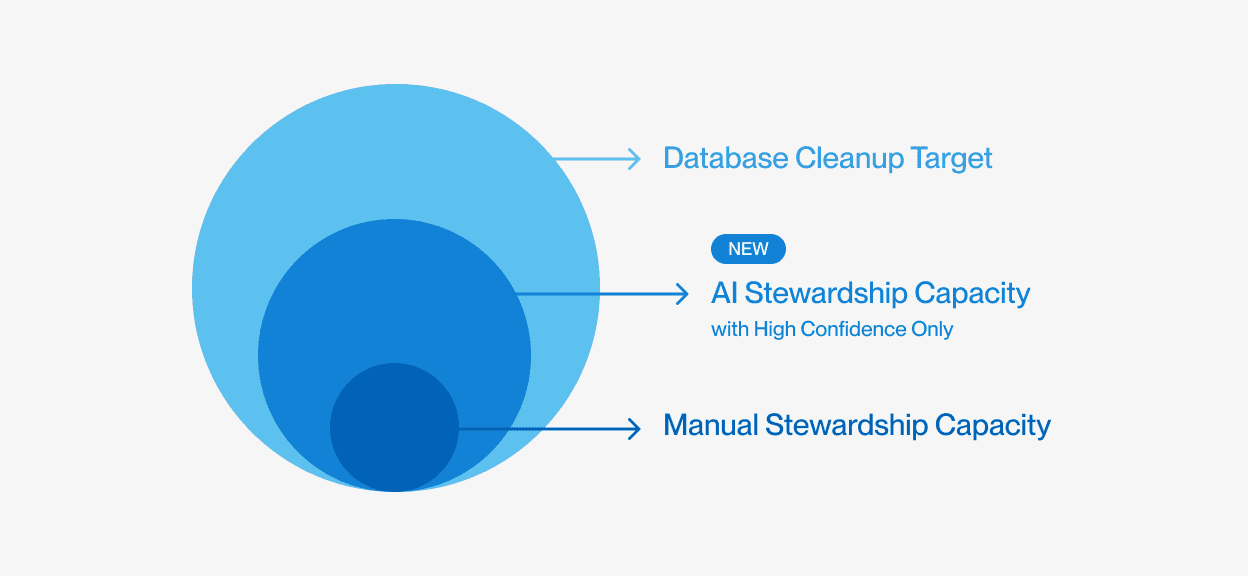
IMAGE 7
Match-oriented Algorithm Potential
Hypothesis & Perceived Risks
Auto-assignment alone was unlikely to improve outcomes, stewardship capacity didn’t appear to be the only constraint. The bigger opportunity might lie in automating entity resolution before records convert into tickets.
Auto-assignment alone was unlikely to improve outcomes, stewardship capacity didn’t appear to be the only constraint. The bigger opportunity might lie in automating entity resolution before records convert into tickets.
Before committing to a direction, I needed to understand the algorithm’s mechanics in detail and test early concepts with SMEs to test feasibility.
Before committing to a direction, I needed to understand the algorithm’s mechanics in detail and test early concepts with SMEs to test feasibility.
PERCEIVED RISKS #01
How accurate is the model in real-world entity resolution scenarios?
How accurate is the model in real-world entity resolution scenarios?
PERCEIVED RISKS #02
Can we define safe thresholds to control what gets auto-resolved?
Can we define safe thresholds to control what gets auto-resolved?
PERCEIVED RISKS #03
What is the appropriate fallback for records that don’t meet confidence targets?
What is the appropriate fallback for records that don’t meet confidence targets?
PERCEIVED RISKS #04
How will stewards perceive AI-enriched recommendations in practice?
How will stewards perceive AI-enriched recommendations in practice?
Process & Collaboration
Understanding the Work, Leveraging the Model
Understanding the Work, Leveraging the Model
Understanding the Work, Leveraging the Model
I focused investigation at two operational levels:
I focused investigation at two operational levels:
Under the hood — at the internal level
I worked with IT SMEs to understand what the algorithm could actually do.
How the model was trained, with what data? How it could be realistically implemented?
I worked with IT SMEs to understand what the algorithm could actually do.
How the model was trained, with what data? How it could be realistically implemented?
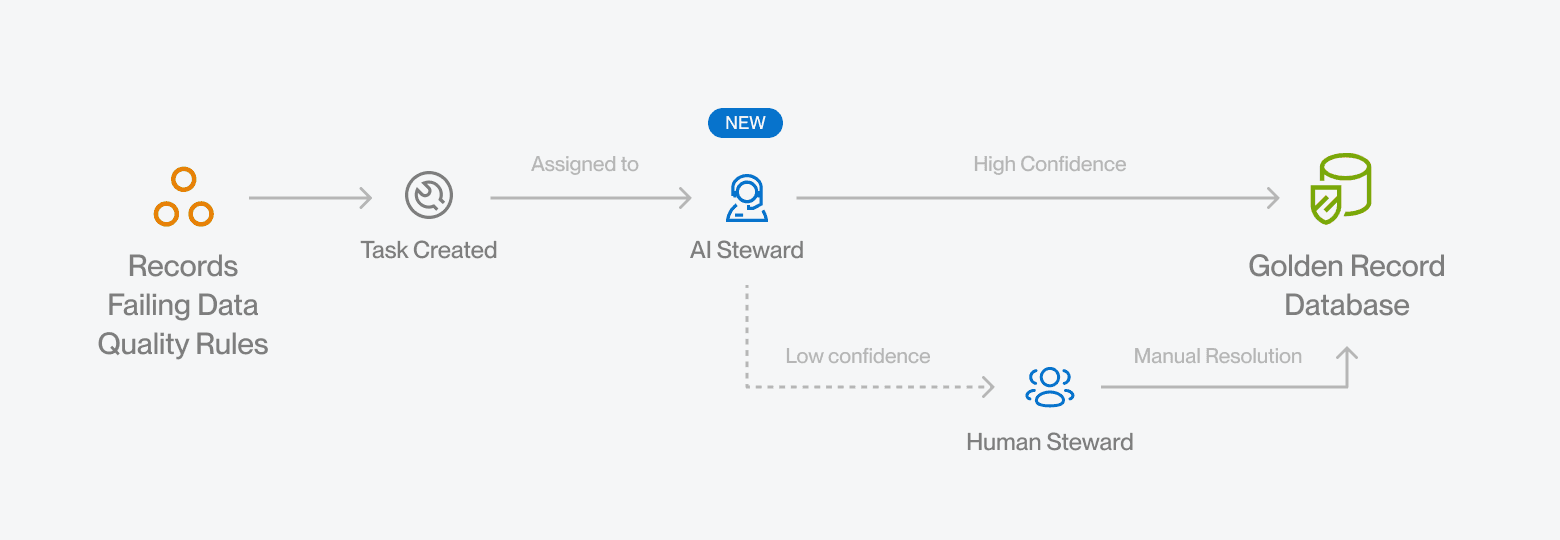
IMAGE 8
Match-oriented Algorithm Potential
It uses a retrieve-extract-match-synthesize pipeline with a built-in confidence threshold, external API calls (e.g. Dun & Bradstreet), and outputs that merge, update, archive, or create records.
It uses a retrieve-extract-match-synthesize pipeline with a built-in confidence threshold, external API calls (e.g. Dun & Bradstreet), and outputs that merge, update, archive, or create records.
KEY CONSTRAINTS #01
Initially the model can only handle AMER and limited in EMEA regions, mostly english-based, and no LLM component.
Inside the trenches — at the external level
Got in touch with Data Owners and Lead Stewards to understand the ground-level reality. Asking about their own process and how are they currently covering target datasets.
How assertive is the research data? What are the steps that could be fixed and repeatable?
Got in touch with Data Owners and Lead Stewards to understand the ground-level reality. Asking about their own process and how are they currently covering target datasets.
How assertive is the research data? What are the steps that could be fixed and repeatable?
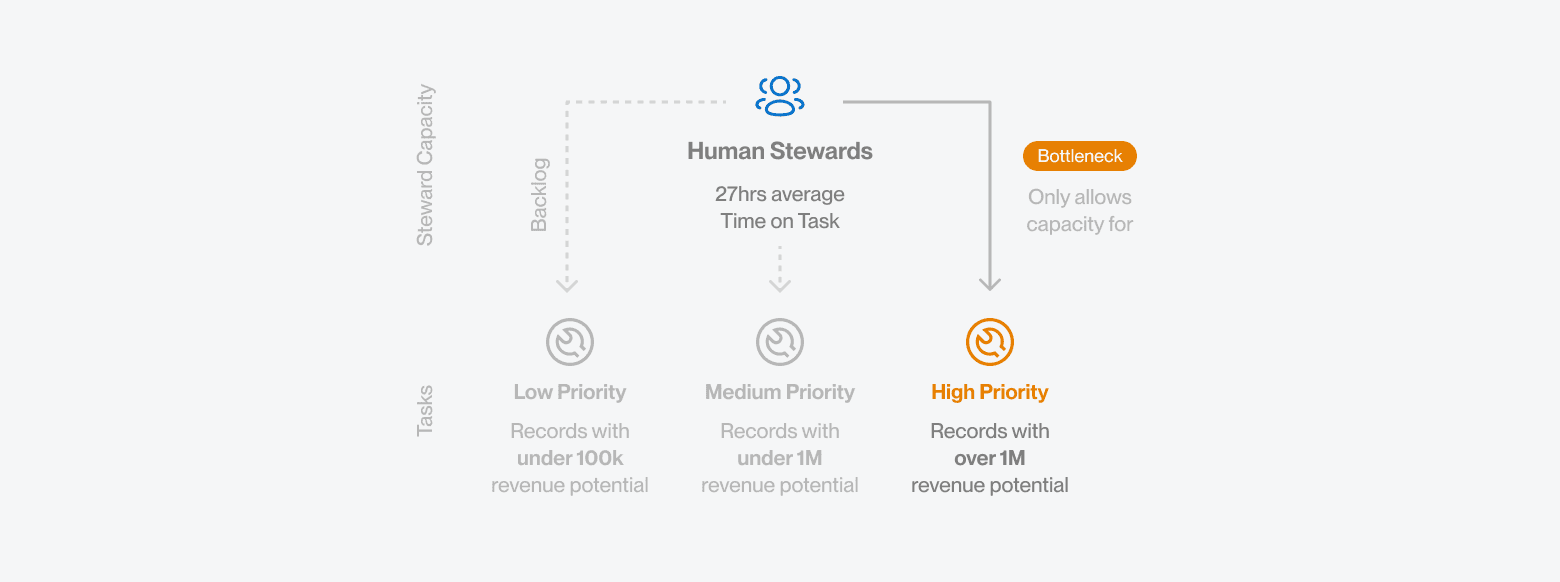
IMAGE 8
Match-oriented Algorithm Potential
The biggest time sink wasn't just task volume, it was research time per record. Stewards were meeting most KPIs but leaving a massive backlog of low and medium-priority records untouched.
The biggest time sink wasn't just task volume, it was research time per record. Stewards were meeting most KPIs but leaving a massive backlog of low and medium-priority records untouched.
KEY CONSTRAINTS #02
Auto-assignment was welcomed but wouldn't solve the throughput problem. Enriched data was useful only if it was accurate, otherwise it risked sending them down the wrong path.
Getting Buy-In from Stakeholders
Early prototypes helped de-risk the direction and clarify trade-offs:
Early prototypes helped de-risk the direction and clarify trade-offs:
CONSIDERATION #01
Auto-assignment wouldn’t drive metrics alone, but it proved critical for load balancing and separating standard work from AI-review duties.
CONSIDERATION #02
The value path was clear…but delivery would require a tightly scoped plan, strong positioning, and a credible proof of concept.
In response, I pitched a Crawl/Walk/Run rollout aligned with the business vision roadmap:
In response, I pitched a Crawl/Walk/Run rollout aligned with the business vision roadmap:
Deliver a MVP targeting low-priority task automation to tackle current operational gaps, measure real performance now, generate usage data to improve the model, and de-risk broader phases.
Deliver a MVP targeting low-priority task automation to tackle current operational gaps, measure real performance now, generate usage data to improve the model, and de-risk broader phases.
A task force was assembled with the IT lead and model architect to run a proof-of-concept test and estimate feasibility before bringing it back to stakeholders and go ahead.
A task force was assembled with the IT lead and model architect to run a proof-of-concept test and estimate feasibility before bringing it back to stakeholders and go ahead.
Design Decisions
Putting It All Together
Putting It All Together
Putting It All Together
Experience Directives
Enhance, don't remake
I deliberately stayed within the established Castle framework, same task structure, same mental models, to reduce friction and accelerate adoption.
In-platform self-service
Lead Stewards configure both human and AI assignment from one place using conditional logic they are familiar with, without leaving the platform.
Conservative confidence thresholds
For the production launch, anything below 100% confidence was routed to human review. The buffer was intentional given the stakes.
Lean on familiar concepts
Expression-based logic is something that stewards are familiar with, we can leverage that to let them build and store rules.
In-platform self-service
Lead Stewards configure both human and AI assignment from one place using conditional logic they are familiar with, without leaving the platform.
Conservative confidence thresholds
For the production launch, anything below 100% confidence was routed to human review. The buffer was intentional given the stakes.
Lean on familiar concepts
Expression-based logic is something that stewards are familiar with, we can leverage that to let them build and store rules.
Enhance, don't remake
I deliberately stayed within the established Castle framework, same task structure, same mental models, to reduce friction and accelerate adoption.
The initial implementation enabled:
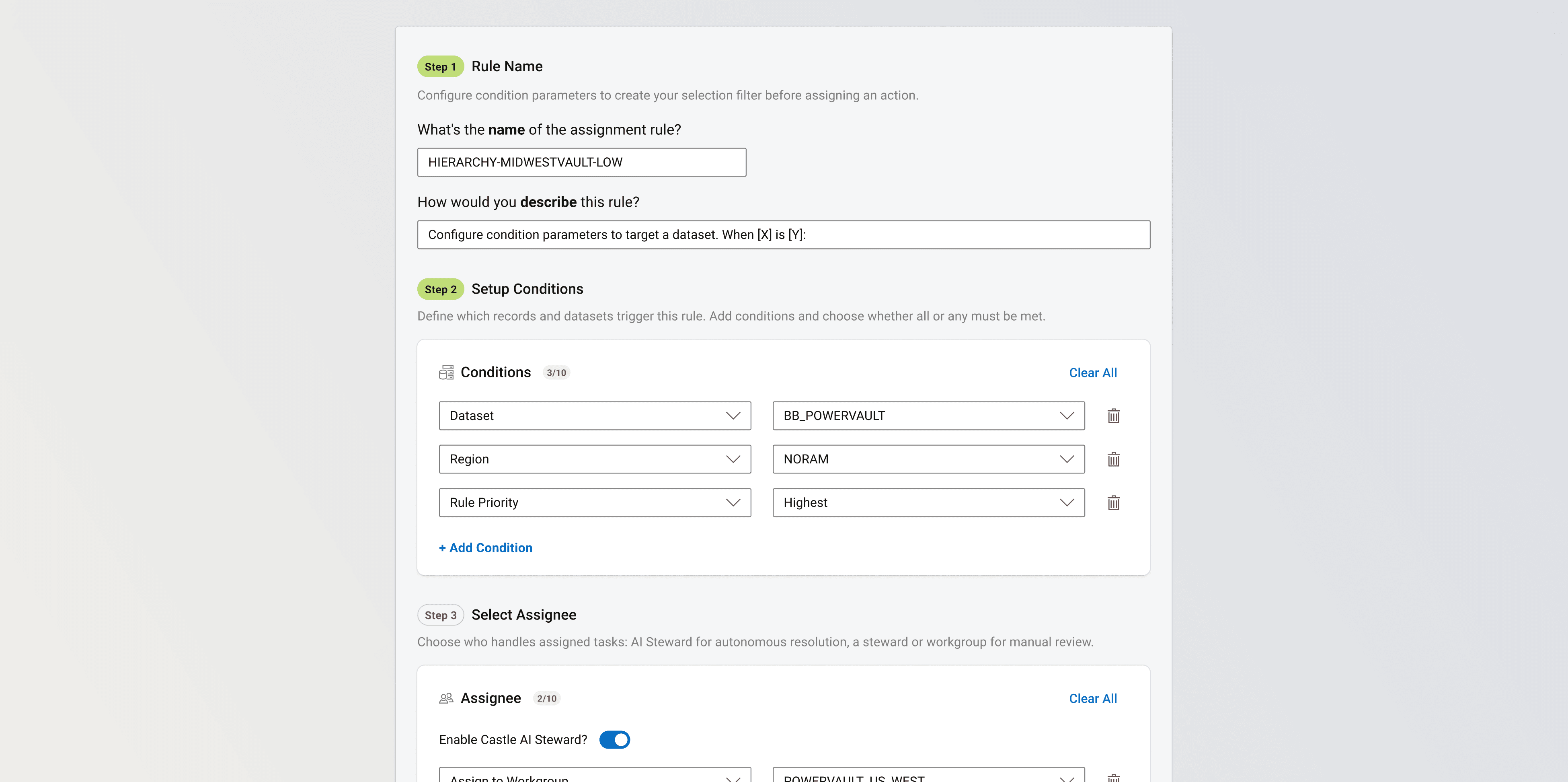
Lead Stewards to configure and assign the AI Steward by dataset priority, with all corrections validated through the existing Data Quality API.
Lead Stewards to configure and assign the AI Steward by dataset priority, with all corrections validated through the existing Data Quality API.
Rule-based auto-assignment for human stewards, including load balancing across standard and review work.
Rule-based auto-assignment for human stewards, including load balancing across standard and review work.
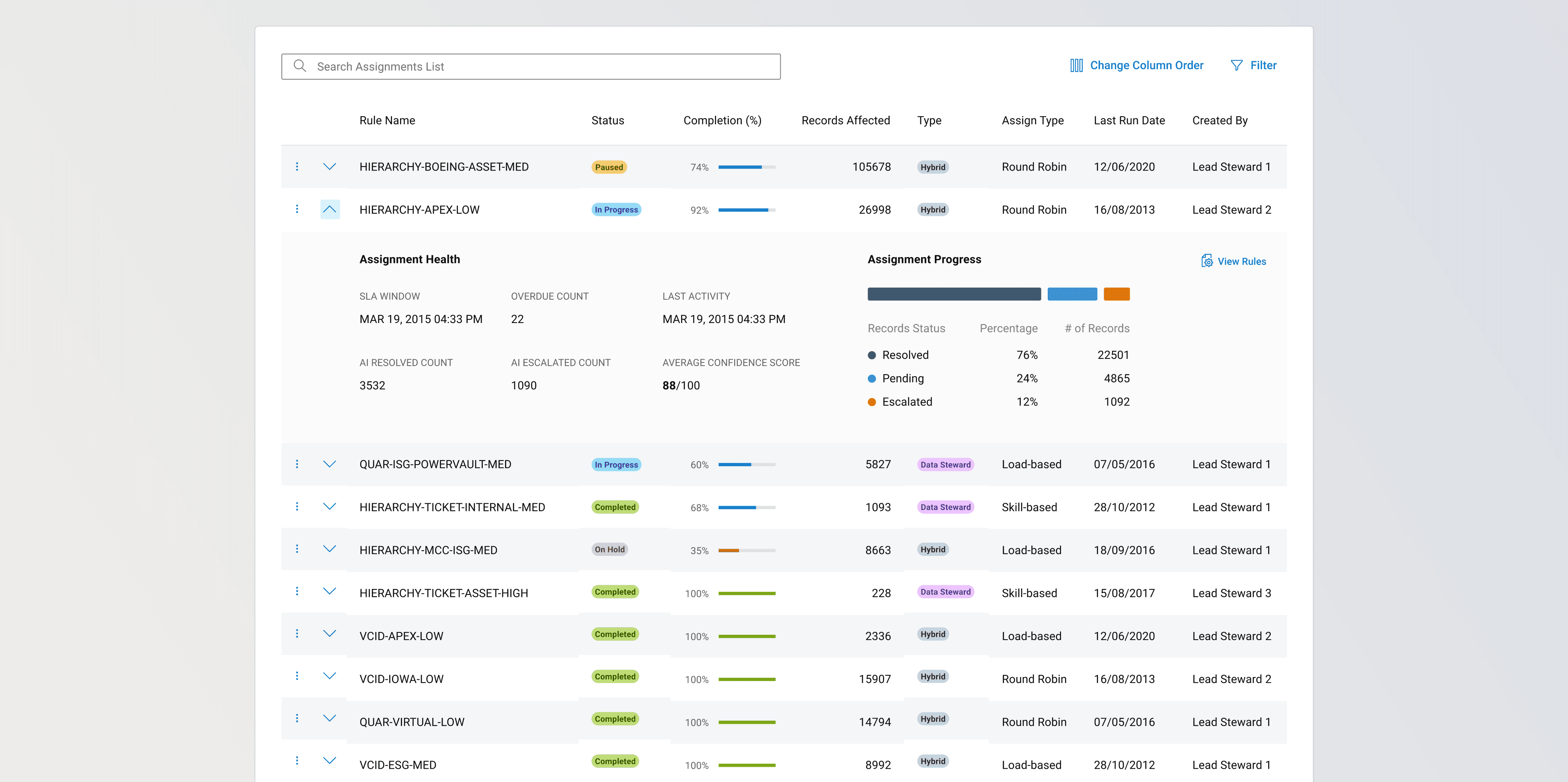
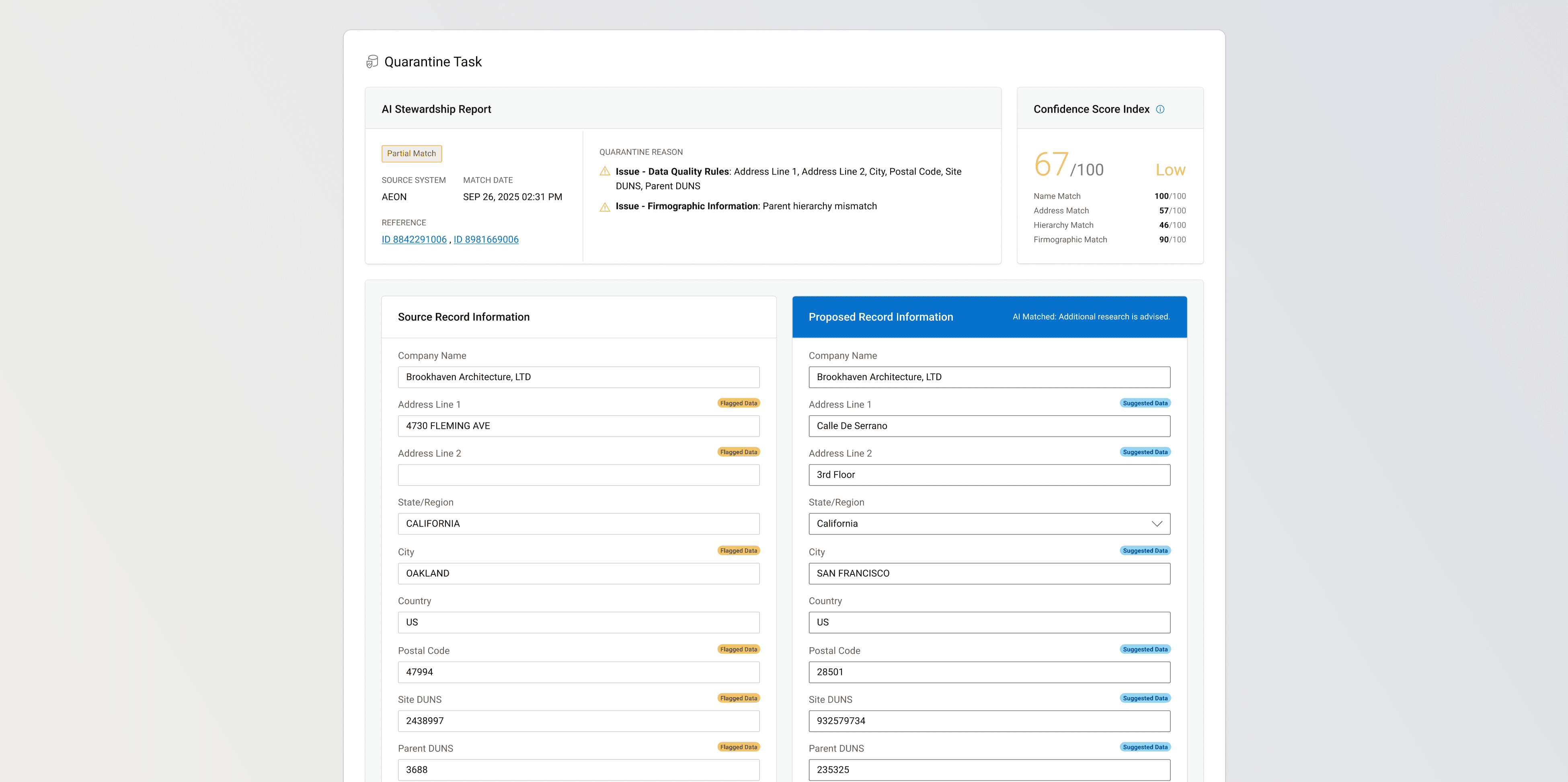
Automatic flagging of records below the Confidence Threshold, routing them to stewards with AI-enriched context for faster review.
Automatic flagging of records below the Confidence Threshold, routing them to stewards with AI-enriched context for faster review.
The initial implementation enabled:
The initial implementation enabled:
Impact Report
How it was received?
How it was received?
How it was received?
Post-release, the feature set influence was measured against the original business challenge: improving data cleansing throughput and SLA-related efficiency.
The impact was front-loaded in Q3 as automation absorbed the largest share of the low-complexity backlog. Q4 showed normalized, sustained performance as work shifted from reactive backlog clearance toward proactive governance.
Post-release, the feature set influence was measured against the original business challenge: improving data cleansing throughput and SLA-related efficiency.
The impact was front-loaded in Q3 as automation absorbed the largest share of the low-complexity backlog. Q4 showed normalized, sustained performance as work shifted from reactive backlog clearance toward proactive governance.
Dataset coverage vs. quarterly target increased from 64% pre-launch to 96% in Q3, reaching 101% in Q4, surpassing target for the first time after consecutive misses
Automated task precision held strong at 89% (Q3) and 84% (Q4), requiring no human override in the vast majority of cases
Automated task precision held strong at 89% (Q3) and 84% (Q4), requiring no human override in the vast majority of cases
Re-established predictability in quarterly data quality KPIs
Re-established predictability in quarterly data quality KPIs
Validated the production readiness of the match algorithm ahead of roadmap timelines
Validated the production readiness of the match algorithm ahead of roadmap timelines
Beyond the numbers, the project re-established quarterly KPI predictability after consecutive misses, shifted stewardship from operational throughput to strategic quality ownership, and validated the match algorithm for production ahead of the broader roadmap.
Beyond the numbers, the project re-established quarterly KPI predictability after consecutive misses, shifted stewardship from operational throughput to strategic quality ownership, and validated the match algorithm for production ahead of the broader roadmap.
Debrief
Lessons from the Field
Lessons from the Field
Lessons from the Field
Domain fluency matters.
My existing relationship with the business domain let me exchange hypotheses directly with stakeholders and spot the real bottleneck earlier.
Domain fluency matters.
My existing relationship with the business domain let me exchange hypotheses directly with stakeholders and spot the real bottleneck earlier.
Involving Cross-functional partners from day one.
It ensured that the project was progressing holistically. I wouldn't be able to gauge technical feasibility and implement the model so early without keeping a tight relationship loop with other teams.
Involving Cross-functional partners from day one.
It ensured that the project was progressing holistically. I wouldn't be able to gauge technical feasibility and implement the model so early without keeping a tight relationship loop with other teams.
AI design is a moving target.
The standard design process doesn't map cleanly onto AI-driven experiences. Performance isn't fully knowable on day zero. I had to lean on iterative loops to understand the algorithm's real potential and limits.
AI design is a moving target.
The standard design process doesn't map cleanly onto AI-driven experiences. Performance isn't fully knowable on day zero. I had to lean on iterative loops to understand the algorithm's real potential and limits.